Why the I-40 Old Fort Grade Is the Most Mechanically Demanding Road We Serve
The I-40 grade between Black Mountain and Old Fort is not just a steep stretch of highway — it's a sustained 5.5% grade over approximately 8 miles that drops roughly 1,600 feet from the Eastern Continental Divide near Ridgecrest to the Old Fort valley floor. That's the steepest sustained grade on an interstate highway in the eastern United States, and it's the reason NC DOT maintains runaway truck escape ramps along the descent, the reason chain control is implemented for eastbound trucks in winter, and the reason there are more highway breakdown calls per mile on this stretch than on virtually any comparable distance of road in our service area.
The mechanics of what this grade does to vehicles are worth understanding because they're directly relevant to how you should respond when something starts going wrong on it. Eastbound (descending): brakes are the primary concern. Eight miles of sustained downgrade at highway speed requires either effective engine braking (downshifting, compression braking) or continuous service brake use — and vehicles whose drivers don't engine brake, or whose brakes are already worn, borderline, or not adjusted for mountain driving, will experience brake fade before they reach the bottom. Brake fade is temporary — a spongy pedal caused by heat buildup in the brake fluid — but it can become brake failure if the system is pushed past its limits without recovery time. Westbound (ascending): cooling systems are the primary concern. Eight miles of sustained uphill at highway load is the most demanding steady-state cooling test a vehicle experiences on the road. A cooling system that was marginally adequate on flat highway simply can't remove heat fast enough under sustained climb load, and the temperature gauge tells the story in real time if you're watching it.
The practical implications: if you're eastbound and the brakes feel wrong, don't try to pump them back to normal on the move — that doesn't work on a grade and uses up what brake capacity remains. Get to the next runaway truck ramp or the first safe pullout and stop. If you're westbound and the temperature gauge is climbing, don't try to push through — pull off at the first opportunity, with the engine running and heater on full to draw heat away from the coolant. In both cases, call us as soon as you're stopped rather than waiting to see if the problem resolves on its own.
What is Old Fort like as a town, and what does that mean for towing calls that aren't on the grade?
Old Fort is a small McDowell County community at the base of the grade — population under 1,000, a downtown on Main Street with the Old Fort Depot museum and a few local businesses, and a surrounding area of rural residential properties in the Catawba River headwaters area. The town generates towing calls that have nothing to do with the grade: residential lockouts and battery calls, breakdowns on US-70 through the Old Fort commercial area, and the occasional vehicle issue from visitors using Old Fort as a base for hiking the Mountains-to-Sea Trail or visiting the local trails around Catawba Falls. These are handled the same way as any call — honestly, with realistic response time estimates given the 28-mile distance from our Asheville base.
Real Questions That Come From Driving the Old Fort Grade
My brakes are getting spongy on the I-40 descent toward Old Fort — what exactly should I do right now, step by step?
Step one: stop applying the service brakes continuously and start using your transmission to slow — downshift immediately, whether you're driving automatic or manual. In an automatic, manually select a lower gear range (typically labeled "2" or "L" or use the paddle shifters if present). This uses engine compression to slow the vehicle and gives your brake system time to cool. Step two: if the pedal is already significantly spongy and engine braking alone isn't keeping speed controlled, the nearest runaway truck escape ramp is your target — use it without hesitation. That's what those ramps exist for. Step three: if the pedal firms up with engine braking and you're maintaining speed control, aim for the first wide safe pullout after the steepest section and stop. The Ridgecrest rest area near the top is a good option if you catch this early. Step four: once stopped on flat ground, keep the vehicle in park or in gear with the emergency brake applied. Do not restart and immediately apply the service brakes to test them — that restarts the heat cycle. Let the system cool 20 to 30 minutes. Step five: call us. Even if the brakes feel normal after cooling, a system that faded on the grade should be inspected before the next descent.
I'm in a semi or heavy vehicle westbound on I-40 approaching the grade — what should I check before the climb and what do you do if I break down on the ascent?
NC DOT posts chain control requirements in winter and high-load warning signs on the approach to the Old Fort grade for commercial vehicles. For the climb itself, the concerns are: cooling system temperature (watch the gauge — the grade will find any weakness), transmission temperature if your truck has a separate gauge, and tire condition (a sidewall failure on the grade is a different situation than one on flat highway). If something goes wrong on the westbound climb — engine overheating, transmission problems, loss of power — get to the right shoulder as fully as possible and call us. Tell dispatch that you're a commercial vehicle, your approximate weight class, and your position on the grade. We dispatch appropriate heavy recovery equipment and approach from the Asheville side. The grade has runaway ramps on the eastbound side, not the westbound climb — there are no escape options on the climb, so stopping early when something feels wrong is the right call rather than pushing to the top.
Are there runaway truck ramps on the I-40 Old Fort grade, and can you reach a vehicle that has used one?
Yes to both. There are runaway truck escape ramps on the eastbound (descending) side of the Old Fort grade — they're the gravel-filled deceleration beds that vehicles with failed brakes use to stop safely. If you've had to use a runaway ramp, you or a passenger need to call us — the vehicle is stopped and your brakes need full inspection before that truck moves again. A vehicle that has used a runaway ramp is in a gravel bed at an angle and requires specific extraction equipment before it can be moved to a road surface. Tell dispatch immediately that the vehicle is in a runaway ramp and which one (there are multiple, and their positions are known to us) — that information changes the equipment we send. NC DOT and sometimes NCDMV will be involved in the inspection and clearance process for commercial vehicles that have used the ramps; we can work within that process.
My car overheated on the westbound climb and I pulled over — how long do I wait, and is it safe to drive to Old Fort from where I stopped?
Wait long enough for the engine to cool fully — with the hood open and the heater running on high with the fan at max, that's typically 25 to 40 minutes in summer heat. Don't open the radiator cap until the upper radiator hose is cool to the touch. Once cooled, check the coolant level in the overflow reservoir — if it's empty or very low, the system lost coolant during the overheat. If the level is fine, the most likely cause was a thermostat or a marginal cooling system that the grade exposed. In either case, make the drive to Old Fort carefully — watch the temperature gauge continuously, and if it begins climbing again before you reach town, pull off immediately and call us. Don't push through a second overheat event. If the coolant reservoir was empty, don't drive at all — you have a leak somewhere and driving will cause the next overheat to come much faster. Call us from where you are.
Can you tow from the Andrew's Geyser Road area and the Old Fort Mountain Loop — those roads look very narrow on the map?
Andrew's Geyser Road and the Old Fort Mountain Loop Road are historic routes that parallel I-40 on the grade — they follow the old railroad grade and pass by Andrew's Geyser, the historic railroad waterfall feature that was used to cool steam locomotives on the climb. The roads are narrow, mostly one lane in sections, and have limited turnaround options in the middle sections. We can reach them, but it requires the right size truck and the right approach planning. Tell dispatch you're on Andrew's Geyser Road or the Mountain Loop, roughly how far from either end (the US-70 entrance near Old Fort or the exit toward Black Mountain), and the vehicle's condition. If the vehicle is off the road or in a position that blocks the single-lane sections, the recovery approach is more complex and needs more planning before we dispatch than a standard highway call.
Old Fort Roads — What We Know About Each Corridor
I-40 Old Fort Grade — Mileposts 65–73
The 8-mile stretch of I-40 from the Black Mountain interchange at Exit 64/65 down to the Old Fort interchange at Exit 73. This is the steepest sustained grade on an interstate in the eastern US — a consistent 5.5% descent for eastbound vehicles, the same sustained climb for westbound. Runaway truck escape ramps on the eastbound side. The most mechanically demanding highway stretch in our coverage area, generating more breakdown calls per mile than any comparable distance of road we serve.
US-70 Through Old Fort — The Historic Descent
US-70 is the original road through the Old Fort area — the predecessor to I-40 that predates the interstate by decades and is the route the Blue Ridge Parkway used to connect to before I-40 was built. US-70 through Old Fort town has the main street commercial character you'd expect of a small mountain community. The US-70 approaches from both the Black Mountain and Marion directions provide the access routes we use for I-40 grade approach depending on where the breakdown is on the grade.
Andrew's Geyser Road & Old Fort Mountain Loop
The narrow roads that parallel the I-40 grade on the historic railroad alignment — Andrew's Geyser Road passes the railroad waterfall feature and the old loop road that steam locomotives used to ascend the grade. These roads attract hikers, cyclists, and history enthusiasts. They're narrow, partially one-lane, and have limited turnaround options in middle sections. Accessible to appropriate tow equipment with advance planning from the dispatch call.
Old Fort Town Center — Main Street & US-70
Old Fort's downtown on Main Street near the Old Fort Depot museum. Small-scale commercial activity, local businesses, and the community that supports the residential population of the Old Fort area. Standard breakdown call profile for a small mountain town — lockouts, dead batteries, and the occasional vehicle that has made it off the grade and into town only to fail completely once the stress of the descent is behind it.
Catawba Falls & Trail Access Roads
Catawba Falls — one of the most-visited waterfall hikes accessible from I-40 — has a trailhead off US-70 east of Old Fort. The access roads to the trailhead and the surrounding recreation area generate parking lot lockouts and battery calls from hikers who have left vehicles unattended for extended periods. The main trailhead access is paved and accessible; the parking areas themselves have occasional issues with vehicle positions that complicate access for larger trucks.
Old Fort Rural Roads — Catawba River Headwaters Area
The rural residential roads around Old Fort that follow the upper Catawba River watershed — Young's Cove Road, Toll Branch Road, and the various access routes into the rural hollows and ridge properties surrounding the community. These roads are accessible with appropriate planning but have the rural mountain character of narrow lanes, minimal turnout space, and variable surface conditions. Standard access questions before dispatch apply.
All Towing and Roadside Services Available in the Old Fort Area
Every service we provide dispatches to Old Fort — I-40 grade, US-70, Andrew's Geyser Road, Old Fort town, and surrounding rural areas. The distance from Asheville is longer, but the response process is identical.
Emergency Towing
Brake failures, overheating, tire failures, and mechanical breakdowns on the I-40 grade and surrounding Old Fort roads. The grade produces genuine mechanical emergencies — not just inconvenient breakdowns — and we treat them with the urgency they warrant. 24/7.
24-Hour Towing
The I-40 Old Fort grade doesn't stop producing breakdowns at night — freight traffic on this corridor runs 24 hours a day, and the grade reveals mechanical problems without regard for the clock. Same dispatcher, same fleet, same process at 2 a.m. as at 2 p.m.
Accident Towing
Post-collision transport from the I-40 grade and Old Fort area roads. Accidents on the grade are coordinated through NCDOT and NC State Highway Patrol — we work within that process. We also handle non-highway accident tows from US-70 and the surrounding Old Fort community roads.
Flatbed Towing
AWD vehicles, EVs, post-accident vehicles, and anything that shouldn't roll under its own power. On the grade specifically, a vehicle that has experienced brake fade severe enough to require stopping should not be towed by wheel-lift if the brake system integrity is uncertain — flatbed is safer for the vehicle and for the road below.
Car Lockout Service
Keys locked inside throughout the Old Fort area — the Catawba Falls trailhead parking, the Old Fort town commercial lots, and residential driveways. Hikers who lock their keys in at Catawba Falls and motorcyclists who lock keys in a saddlebag they can't access without the ignition on are specific Old Fort call types we see regularly.
Battery Jump Start
Dead batteries throughout the Old Fort area — trailhead parking where vehicles sit for extended hikes, commercial and residential calls in Old Fort town, and the occasional eastbound traveler who pulls into Old Fort after the grade and discovers the battery was already weak when they started. Commercial boost equipment, honest assessment of battery condition after the jump.
Motorcycle Towing
Flatbed with wheel chocks and soft straps for all bike types. The I-40 grade and the Andrew's Geyser / Mountain Loop Road are both motorcycle destinations in the Old Fort area — the grade for those who understand what it demands, the historic roads for sightseers and history enthusiasts. Motorcycle breakdowns on both are part of our call profile here.
Heavy Duty Towing
Semi-trucks, commercial vehicles, RVs, and oversized equipment on the I-40 grade. The Old Fort grade is one of the most demanding commercial vehicle corridors in the Southeast — eastbound trucks must have adequate braking before the descent, and those that don't are exactly the calls we handle. Heavy wrecker dispatch, runaway ramp extractions, grade recovery — 24/7.
Long Distance Towing
Transport from Old Fort to Asheville, Charlotte, Black Mountain, Marion, or wherever the vehicle needs to go. Eastbound travelers who break down on the grade near Old Fort and can't wait for a local repair often need the vehicle transported back toward Asheville or west to where they came from. Quoted before departure, destination confirmed before dispatch.
Roadside Assistance
Fuel delivery, tire changes, and minor roadside fixes in the Old Fort area. Travelers who stop in Old Fort and discover they've developed a problem that a simple fix can address — a tire that went soft, a fuel situation, a minor roadside issue — get the same roadside assessment we bring to every call.
Understanding the I-40 Old Fort Grade From a Mechanical Standpoint
The grade statistics sound abstract until you understand what they do to a vehicle that isn't prepared for them. Here's what the terrain actually means for brakes, cooling, and tires.
Eastbound Descent — Why Brake Fade Happens Here More Than Anywhere Else
A 5.5% grade sustained over 8 miles means a vehicle loses 1,600 feet of elevation — enough to raise brake system temperatures significantly in any vehicle that isn't actively using engine braking. Most passenger vehicle drivers don't downshift on descents, relying entirely on service brakes. On flat roads this is fine. On the Old Fort grade, it deposits enough heat into the brake fluid and pads that a system already running borderline will fade before reaching the bottom. The fade is temperature-induced and temporary — but a temporarily non-functional brake system at highway speed on a mountain grade is not a situation you manage by waiting to see if it gets better.
Westbound Ascent — Why Cooling Systems Fail on This Specific Grade
The same 8 miles driven westbound puts a sustained load on the cooling system that flat highway simply can't replicate. Engine RPM stays high, the thermostat is open, and the radiator is working continuously to remove heat from coolant that can't cool down between demands. A cooling system with a weak water pump, a borderline thermostat, low coolant, or a partially obstructed radiator may function adequately for years on flat roads and fail completely on the westbound Old Fort climb. The temperature gauge tells the story in real time — watch it on the climb, not after you smell something.
The Runaway Truck Escape Ramps — What They Are and When to Use Them
There are three runaway truck escape ramps on the eastbound (descending) side of the Old Fort grade. These are gravel-filled deceleration beds on the right side of the highway that vehicles with failed or inadequate brakes use to stop safely. The gravel and the uphill angle of the beds combine to decelerate the vehicle without brakes. They are not for vehicles that have minor brake fade — they are for vehicles that have lost effective braking capacity on the grade. Using one is the right decision if that's your situation. Do not attempt to continue past a ramp if your brakes are not working. The truck that uses the ramp and calls us is in a far better position than the one that continues down the grade with non-functional brakes.
The Old Fort Grade in Winter — Chain Control and Ice Conditions
NCDOT implements chain control requirements for commercial vehicles on the Old Fort grade during winter weather events — often while the roads at lower elevations appear clear, because the grade's elevation and exposure to moisture from the Swannanoa Valley create ice conditions that don't correspond to what the weather at exit 73 looks like. The grade also has specific refreeze zones — areas where drainage patterns, shade, and overnight cooling create persistent ice even after the road surface around them has melted. Winter breakdown calls from the Old Fort grade have a specific seasonal frequency that we prepare for every year.
Three Old Fort Grade Towing Calls We've Handled
Brake Fade, I-40 Eastbound Descent, Midpoint of the Grade — Family SUV
A family heading east from Asheville toward Charlotte felt the brake pedal go spongy about four miles into the descent. The driver, to his credit, downshifted immediately and slowed to a safe speed before pulling onto the right shoulder at the next available wider section. He didn't use the service brakes again to stop — let engine braking and gravity do the work once the pedal felt wrong. He called us from the shoulder with the approximate milepost. We dispatched from Asheville and approached from the Old Fort exit (73), coming up the grade from the bottom — that approach put the truck on the downhill side of the disabled vehicle, which is correct positioning for a grade recovery where the most likely movement is downhill. The brake fluid was discolored from heat — the pads had enough material but the fluid had absorbed enough moisture over time to boil at a lower temperature than fresh fluid. That's a maintenance item most people don't track. The vehicle was flatbedded to an Asheville shop. No injuries, no further incident on the grade.
Engine Overheat, I-40 Westbound Climb, Fully Loaded Semi, July
A fully loaded refrigerated semi-truck heading west from Charlotte to Knoxville had its engine temperature alarm activate about three miles into the westbound climb — the reefer unit added to the electrical and cooling load on a 95-degree July afternoon. The driver pulled onto the right shoulder and called dispatch. He described the vehicle accurately: a 53-foot refrigerated trailer, about 78,000 pounds gross, temperature alarm active, engine shut down. We dispatched our heavy wrecker from Asheville. The driver knew the load temperature threshold for the cargo and was monitoring it — the reefer was running on battery backup. We were on scene in 42 minutes. The engine had a failed thermostat — it wasn't opening fully, which restricted coolant flow under the sustained load. We had the vehicle cooled and the driver in contact with his fleet mechanic within the hour. The repair was made at a truck stop in Marion rather than requiring transport. Not every call ends in a tow — sometimes the right outcome is stabilizing the situation and confirming the driver can proceed safely.
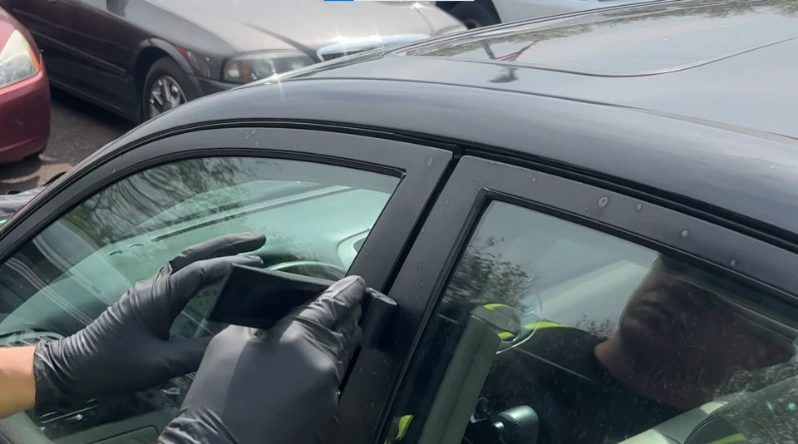
Lockout, Catawba Falls Trailhead, Returned from 4-Hour Hike
Two hikers returned from a round trip to Catawba Falls — about four hours on the trail — to find their keys locked in the car in the trailhead parking lot off US-70 east of Old Fort. Full cell signal at the trailhead. They called at 3:45 p.m. on a Saturday. Old Fort is 28 miles from our Asheville base, so the response time was longer than for our closer zones — we told them honestly it would be 40 to 50 minutes. They waited at the trailhead, which was still busy with afternoon hikers coming and going. Driver was on scene in 44 minutes. Air wedge and slim jim on the rear passenger door — the front door seal was tighter than the rear. Car open in under four minutes, keys on the front seat exactly where they'd been left. The hikers mentioned they'd called two other local towing numbers before us and both went to voicemail. On a Saturday afternoon in a rural area 28 miles from Asheville, having a line that actually gets answered matters.
What People Say About Towing on the Old Fort Grade
"Brakes went spongy heading east on I-40 about halfway down. I downshifted immediately and pulled off at the first shoulder wide enough to stop safely. Called 828-920-1126 and the dispatcher knew exactly what brake fade on the Old Fort grade means — gave me the right advice while I waited. Truck came from the bottom, positioned correctly. Whole thing handled professionally."
"Our semi overheated on the westbound climb — 95 degrees, full load, reefer running. The dispatcher understood exactly what a loaded commercial vehicle on that grade requires. Heavy wrecker on scene in under 45 minutes. Driver helped us stabilize the situation, talked through the thermostat issue with our fleet mechanic by phone. We made it to Marion under our own power. That outcome was better than we expected."
"Locked our keys in at the Catawba Falls trailhead after a long hike. Called two numbers — both voicemail. Towing Asheville answered immediately, gave us an honest 45-minute estimate for the 28-mile drive, and showed up in 44 minutes. Open in under five minutes. The honesty about the wait time actually made the whole thing less stressful — we knew what to expect instead of wondering."
What Does Towing Cost From the Old Fort Grade Area?
Old Fort is approximately 28 miles east of our Asheville dispatch — one of our farther response zones, which is reflected in both the mileage component of the quote and the response time. A grade recovery on I-40 near Old Fort involves the drive from Asheville, the approach up or down the grade, and the destination after loading — all of which factor into the specific quote you receive on the call.
Commercial vehicle and semi-truck recoveries on the grade are quoted specifically based on vehicle type, recovery complexity, and destination — these are not standard per-mile tows and the pricing reflects the equipment and time required. All prices quoted before we move. After-hours adds approximately $35. Runaway ramp extractions involve NCDOT coordination and are quoted after assessing the specific situation.
| Old Fort Scenario | Approx. Starting Cost |
|---|---|
| Grade recovery to Old Fort or Black Mtn | ~$130–$185 |
| Old Fort to Asheville shop | ~$145–$200 |
| Town call within Old Fort area | ~$105–$140 |
| After-hours addition | +~$35 |
| Commercial vehicle / semi-truck | Quoted on call |
We Also Serve Areas Near Old Fort
Old Fort sits at the base of the Eastern Continental Divide — Black Mountain is 10 miles west up the grade, Marion is 10 miles east in McDowell County.
The I-40 Descent Into Old Fort
Six miles of steep, sustained downhill grade — the reason this exit sees more truck recoveries than almost anywhere else in Buncombe or McDowell County.
Six Miles, One of the Steepest Drops on I-40
From Ridgecrest to the Old Fort exit (Exit 73) — eastbound trucks descend the whole way, brakes working the entire time.
Old Fort Grade Towing FAQs — Questions Specific to This Corridor
How long does it take to reach the I-40 Old Fort grade from your Asheville base?
Old Fort is approximately 28 miles east of our Asheville dispatch location. Under normal conditions, reaching the midpoint of the grade — the most common breakdown zone — takes 35 to 50 minutes depending on traffic and the specific milepost. Grade recoveries require approaching from either the Old Fort exit (73) or the Black Mountain exit (64/65) depending on where the vehicle is on the grade, which also affects the timing. We give you a specific estimate on the call. The distance is longer than our other service zones, and we're honest about that rather than quoting a number that sounds better than reality.
What exactly should I do if my brakes fail or fade on the I-40 Old Fort descent?
Three things, in this order: downshift immediately to use engine compression braking and take load off the service brakes; use the runaway truck escape ramp if your braking capacity is insufficient to control your speed — that is exactly what those ramps are for; if brake fade is early and you still have partial braking, aim for the first safe wide shoulder or pullout and stop there. Once stopped: keep the vehicle in gear or park with the emergency brake applied. Do not try to pump a spongy pedal back to normal on a grade — that doesn't work the same way it does on flat ground and uses up remaining brake capacity. Call us from where you've stopped. Don't drive again on those brakes without a mechanic's assessment of whether the fade is resolved and the system is intact.
Can you extract a vehicle from a runaway truck escape ramp on the I-40 grade?
Yes. Runaway ramp extractions are a specialized recovery that requires specific equipment — typically a heavy wrecker with the right rigging to pull a vehicle out of the gravel bed at the angle the ramp puts it in. Tell dispatch immediately that the vehicle is in a runaway ramp and your best estimate of which one (there are three on the eastbound descent). The ramp extraction also involves NCDOT and often NC State Highway Patrol, and we coordinate within that process rather than treating it as a standard tow. For commercial vehicles in a ramp, the vehicle's brakes are inspected and the driver may not be permitted to continue until that inspection is complete.
Is Old Fort technically in McDowell County, not Buncombe — does that affect coverage?
Old Fort is in McDowell County, and our primary coverage area is Buncombe County. However, the I-40 Old Fort grade is one of the most consistent and specific breakdown corridors that affects drivers heading to and from the Asheville area — and we cover it. The grade itself straddles the Buncombe/McDowell county line, with the upper portion near Black Mountain in Buncombe and the lower portion near Old Fort in McDowell. We don't apply a county line cutoff to grade calls — a driver in trouble on the descent doesn't need a geography lesson. Call us, tell us where you are on the grade, and we'll tell you the response plan and the honest arrival time.
My temperature gauge is climbing on the westbound I-40 climb — how much time do I have before serious engine damage?
Not much, and the answer varies based on how fast the gauge is rising and what the root cause is. Once the gauge passes the normal range and enters the hot zone, pull off at the first available safe location — the next shoulder, the next exit, the next pullout. Don't try to reach the top before stopping. Once stopped, turn the heater on full with max fan — that draws heat away from the coolant and into the cabin. Do not turn the engine off immediately if the gauge is already in the red — let it idle for a few minutes with the heater running before shutting down. Turning off a severely overheated engine traps heat in the system without coolant circulation, which can warp head gaskets. Once idling brings the temperature down, shut off, open the hood, and wait 25 to 30 minutes before checking anything. Then call us for an honest assessment of whether the situation is a minor cause that's resolved or something that requires transport.
Are there places to safely pull over on the I-40 grade if something goes wrong?
Yes — the grade has pull-off areas, emergency brake check areas, and the runaway ramps on the eastbound descent. The widest and most accessible shoulder areas are near the bottom of the grade approaching Exit 73 in both directions. The middle sections of the grade have variable shoulder width — some adequate, some narrow. The top of the grade near the Buncombe/McDowell county line and the area near the Ridgecrest rest stop (when it's open) are good options for early-grade problems that you can catch before they become severe. On the eastbound descent, the runaway ramps are on the right — they're clearly marked. If you're not sure where to stop, the general rule is: get as far right as possible with hazards on, and call us from wherever you've stopped. A vehicle safely stopped on a narrow shoulder is better than one that continued when it shouldn't have.
What's the difference between US-70 through Old Fort and the I-40 grade — can you reach both?
Yes, we cover both. US-70 through Old Fort is the original road through the mountain — a two-lane route through the Old Fort community that predates the interstate and provides access to the historic parts of town, the Catawba Falls area, and the Andrew's Geyser Road approach. I-40 is the interstate highway with the sustained grade. US-70 through Old Fort is much easier to work on than the I-40 grade — wider pullouts, lower speeds, more commercial infrastructure nearby. The I-40 grade is the more technically demanding call. Both reach the same dispatcher. Tell us which road you're on and we'll apply the right approach.
What should I know about winter driving on the I-40 Old Fort grade before I attempt it?
Several things worth knowing: NCDOT implements chain control requirements for commercial vehicles on the grade when conditions warrant — check the NCDOT 511 system or call 511 before attempting the grade in winter weather with a commercial vehicle. Passenger vehicles are not chain-controlled in the same way, but the grade can be significantly icier than the roads at the base — don't judge grade conditions by what the road looks like at Exit 73. Specific refreeze zones on the grade create persistent ice that doesn't melt with the surrounding surface after treatments. The most dangerous combination is a driver who treats the grade as normal highway in conditions where it absolutely is not. If you're driving the grade in winter weather and something feels wrong — traction loss, unexpected ice — don't continue. Pull over immediately, call us, and tell NC DOT via 511 about the specific location of the problem. Other drivers behind you need to know.
Stuck on the I-40 grade, in Old Fort, or on the US-70 approach?
Tell us exactly where you are — milepost, direction, and vehicle type. Real dispatcher, 24 hours a day, honest arrival time, price before we move.
Call 828-920-1126