From the Scene to the Destination You Choose
The Corridors Where Our Accident Calls Cluster
I-40 Old Fort / Black Mountain Grade
A documented pattern of accidents tied to steep grades, tight curves, and narrow shoulders that leave little room to maneuver after a collision — one of the most demanding recovery environments in the county.
I-26 Near the I-40 Interchange
Sustained grade toward the Saluda climb combined with merging traffic contributes to a higher concentration of incidents at this junction.
Beaucatcher Tunnel Corridor
Lower speed, higher frequency, tighter recovery logistics given limited space to stage a tow truck safely.
Downtown Intersections
Pack Square, Biltmore Avenue, and Wall Street see a different accident pattern — lower speed but higher pedestrian and parking-related complexity.
Wet-Weather Curves, Rural Buncombe County
Two-lane rural roads with reduced visibility and no shoulder see a distinct accident pattern during heavy rain and fog, common in this terrain.
What Should I Do While I Wait for Accident Towing?
- Move to a safe location away from traffic if you're physically able to and it's safe to do so.
- Turn on hazard lights.
- Exchange insurance information with the other driver(s) involved if applicable.
- Take your own photos of the scene and vehicle damage if you're able to.
- Don't sign anything from a tow company you didn't call yourself.
- If a tow truck arrives that you didn't call, you're not obligated to use it — see our FAQ below on rotation towing.
Real Accident Calls We've Answered
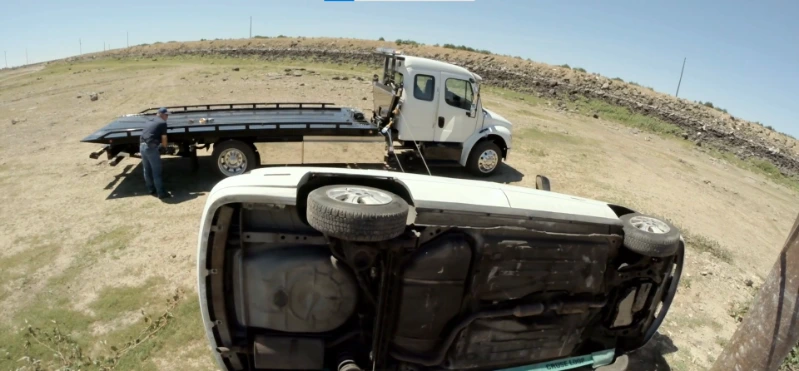
Rear-End Collision, Beaucatcher Tunnel
A driver was rear-ended in slow-moving tunnel traffic during evening rush hour. Our crew coordinated with the responding trooper to stage safely in the tunnel's limited shoulder space, photographed the damage before loading, and delivered documentation the customer's adjuster later confirmed made the claim process easier.
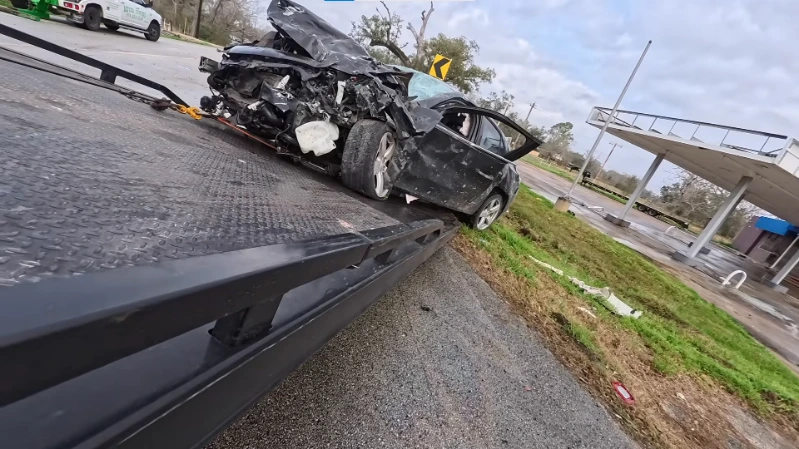
Single-Vehicle Curve Accident, Rural Buncombe County
A driver lost control on a wet, unlit curve on a two-lane rural road with no shoulder. Our flatbed recovered the vehicle from the embankment with full documentation for the insurance claim, since the vehicle's own tow points weren't reliable enough to trust after the impact.
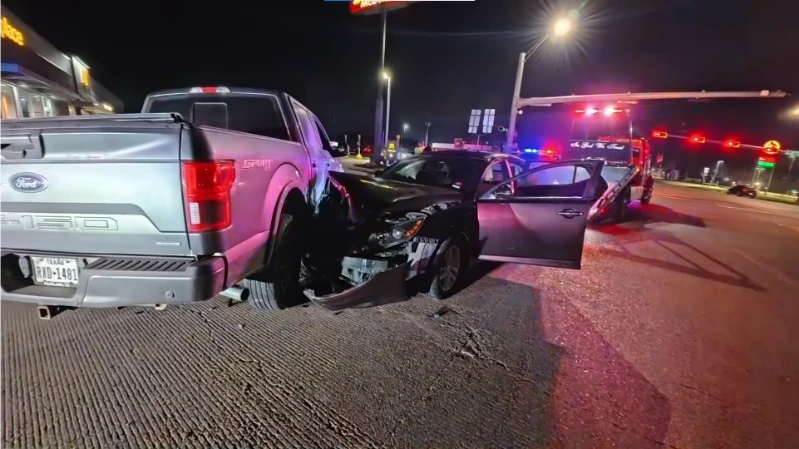
Multi-Vehicle Incident, I-26/I-40 Interchange
A chain-reaction incident near the interchange required recovering two vehicles from the same scene while state troopers managed lane closures. We coordinated directly with the trooper on scene for sequencing, so both vehicles were cleared without a second dispatch trip.
What Customers Say About Our Accident Recovery
"Got rear-ended near the Beaucatcher Tunnel. They coordinated with the trooper on scene without me having to explain anything twice, and photographed the damage before loading it — my insurance adjuster said that made the claim easier."
"Someone backed into my parked car outside South Slope, other driver took off. They photographed everything before loading — insurance didn't question a single detail."
"Spun out on the wet curve by the 240 split, no one hurt but the car wasn't drivable. They waited with me until the trooper cleared the scene, didn't just drop it and go."
What Does Accident Towing Cost?
Accident calls are priced the same transparent way as every other service we offer — a number before dispatch, factoring in distance, vehicle condition, and time of day. If your vehicle needs flatbed recovery because its own tow points aren't trustworthy after a collision, that's factored in upfront too.
| Factor | Typical Starting Rate |
|---|---|
| Base hook-up (standard vehicle) | ~$85 |
| Per mile beyond first 5 | ~$4.75/mi |
| Flatbed-required vehicle | + ~$25 |
| Vehicle storage, if applicable | ~$45/day |
Accident Recovery Across All of Buncombe County
Downtown Asheville, South Asheville/Biltmore, West Asheville, and every surrounding town below — including every mountain corridor in the county.
What People Ask After an Accident in Asheville
Do I have to use the tow truck that shows up uninvited at the accident scene?
No. In North Carolina, you have the right to choose your own towing company after an accident, regardless of who shows up first. A truck that arrives without being called is sometimes called a "chase tow" and is legally problematic under NCGS 20-280. You can decline service and call a company of your choice. If law enforcement is present, tell the officer you want to call your own tow company.
Should the tow truck driver document my car's condition before loading it?
Yes — a professional driver does this automatically. Pre-tow documentation protects both you and the company. If any new damage appears after the tow, the pre-load documentation is the evidence it occurred during transport. Ask the driver if they've documented the condition before they start loading. If they haven't, take photos yourself before the vehicle goes on the truck.
Can you take my vehicle to a specific repair shop rather than wherever the tow company chooses?
Always. You specify the destination — your preferred shop, your home, a storage facility. A towing company should never assume the destination. Tell us where you want it during the dispatch call. If you don't have a preferred shop in Asheville, we can suggest one, but the choice is always yours.
Will my insurance pay for the tow after an accident?
It depends on your coverage. If you have comprehensive or collision coverage with roadside assistance, towing is often covered or reimbursable up to a set limit. If you're not at fault, the at-fault driver's liability insurance may cover towing as part of property damage. Keep your receipt and get it to your insurance adjuster — don't assume coverage exists without confirming with your policy.
Four Things to Do Before the Tow Truck Arrives
In order, in plain terms — this is the sequence that keeps everyone safest and makes the insurance claim easier.
Accident Towing FAQs — What Asheville Drivers Ask
Can I choose my own towing company after an accident?
In many situations, yes. If law enforcement has not already assigned a tow through a rotation system or emergency safety procedures, you may have the right to choose the towing company that transports your vehicle. Before agreeing to any tow, ask where your vehicle will be taken, request a copy of the paperwork, and confirm any charges that may apply.
Where will my vehicle be taken after an accident?
That depends on the condition of your vehicle, insurance requirements, and your preference when applicable. Your vehicle may be transported to your preferred repair shop, a dealership, your home, or a storage facility if required. If police are directing the scene, they may provide instructions about where the vehicle should be taken before it can be released.
Will my auto insurance cover accident towing?
Many insurance policies include towing coverage after a covered accident, but benefits vary depending on your insurer and policy. Some companies pay the towing provider directly, while others reimburse you after the claim is processed. It's always a good idea to contact your insurance company as soon as possible to understand what expenses are covered.
Can you tow a vehicle that's too damaged to drive?
Yes. Vehicles with severe collision damage, broken suspension, deployed airbags, locked wheels, or major mechanical failures can often still be safely recovered using specialized towing equipment. The recovery method depends on the vehicle's condition and the surrounding environment to help prevent additional damage during loading and transport.
What information should I collect before my vehicle is towed after an accident?
Before your vehicle leaves the scene, try to collect photos of the damage, the other driver's insurance information, vehicle registration details, witness contact information if available, and the responding officer's report number. Keeping accurate records can make the insurance claims process much smoother after the vehicle has been removed.
Can my vehicle be taken directly to my preferred repair shop?
In many cases, yes. If your vehicle doesn't need to be held for investigation or taken to an impound facility, you may request transport to your preferred collision repair shop, dealership, or another approved location. Let the dispatcher know your preferred destination before the tow begins whenever possible.
What happens if my accident occurs on a highway or interstate?
Safety becomes the highest priority. Follow instructions from law enforcement and emergency responders, turn on your hazard lights if possible, and stay away from moving traffic. Depending on the location, officers may manage traffic flow or request specific towing procedures to clear the roadway safely and reduce the risk of secondary accidents.
Should I remove my personal belongings before my vehicle is towed?
Yes, whenever it's safe to do so. Remove important personal items such as wallets, phones, identification, medications, keys, electronic devices, and valuable belongings before the vehicle is transported. If the vehicle must be taken immediately for safety reasons, ask where it will be stored so you know how to retrieve your remaining property later.
What if my car looks fine but doesn't feel safe to drive after the accident?
Not all accident damage is visible. Steering, suspension, brakes, wheels, frame components, or electronic safety systems may be damaged even when the exterior appears relatively normal. If the vehicle pulls to one side, makes unusual noises, leaks fluids, or warning lights remain on, towing is usually the safest option until it can be professionally inspected.
What happens after my vehicle arrives at the repair shop or storage facility?
Once the vehicle is delivered, the repair shop or storage facility will document its condition and begin the next steps based on your instructions or your insurance company's claim process. If repairs are needed, an estimate is usually prepared before work begins. Staying in contact with both your insurer and the repair facility helps keep the process moving smoothly.
In an accident right now?
A real dispatcher answers 24 hours a day, every day of the year.
Call 828-920-1126