Motorcycle Towing Is Different — and the Equipment Has to Match
A four-wheel vehicle can take a hook under the frame and roll on its rear tires without much drama. A motorcycle can't. The moment you try to tow a bike using gear that wasn't designed for it — a generic hook, a cargo strap across the tank, a wheel-lift rigged for a sedan — you're introducing stress to components that weren't built for that kind of lateral or forward load. Forks bend. Fairings crack. Paint gets scratched in ways that are both obvious and expensive to fix.
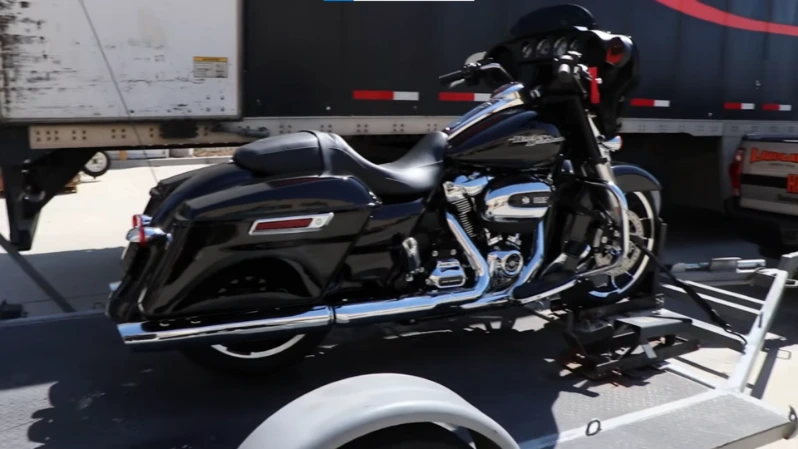
The correct setup is a flatbed with a front wheel chock that holds the bike upright without anyone having to keep a hand on it, paired with soft straps that attach to the handlebars or frame — not the suspension, not the bodywork — and are tensioned to secure the bike without compressing the front forks past their travel range. That's what we use. It's not a special service that costs extra; it's just how motorcycles get transported correctly.
Does it matter what kind of motorcycle it is?
Yes, more than most people expect. A cruiser with a low center of gravity loads differently than a tall adventure bike. A sport bike with aggressive bodywork needs straps routed around specific areas to avoid the fairings entirely. A lowered custom build may scrape during loading if the approach angle isn't adjusted. An electric motorcycle — a Zero, a LiveWire, an Energica — has regenerative braking behavior that changes how it feels to push or roll, and no traditional exhaust or engine noise to indicate what's happening mechanically. When you call, letting us know the make, model, and approximate year gives the driver time to think through the loading approach before they arrive rather than improvising on a roadside.
What about motorcycles that have been in an accident?
This is actually where getting the transport right matters most, and it's also where people are most likely to make a costly mistake. After a collision, the visible damage is never the whole story — a bike that looks like it only has a scratched tank and a broken mirror might have a bent frame, compromised steering head bearings, or fork damage that makes it genuinely unsafe to ride. Even if the bike starts and rolls fine at the scene, that's not a reliable indicator of structural integrity.
What matters for transport purposes is that a damaged motorcycle is often harder to load safely — it may not roll freely, the front end may pull to one side, and if the handlebars are bent or missing, the standard strap attachment points change. We've loaded bikes off mountain roadsides after low-sides, bikes that got clipped in parking lots, and bikes that went down on wet pavement after crossing a painted line. The loading approach changes based on the specific damage, and that's a conversation the driver has with you on site, not something anyone can fully script in advance.
Situations Asheville Riders Run Into — and What to Do
My bike broke down on the Blue Ridge Parkway and I have no signal — what now?
This is one of the more specific challenges of riding in this area, and it happens regularly enough that it's worth thinking through before you're actually in it. Large stretches of the Parkway have no cell coverage at all, particularly between the Craggy Gardens area and the southern sections near Pisgah. If you're broken down with zero signal, try moving uphill or to a higher, more open point if you can do so safely — sometimes a few hundred feet of elevation change is enough to get one bar. If another rider or driver stops, ask them to call us when they reach coverage and give them the nearest named overlook or numbered mile marker, which is the most reliable location reference on the Parkway. We can reach a specific mile marker faster than we can find a vague description like "somewhere past Craggy."
I'm riding a custom or lowered bike — will it scrape during loading?
It might, if the driver doesn't adjust for it. Low-angle loading — keeping the ramp angle as shallow as possible — is the standard approach for bikes with reduced ground clearance, and it's something an experienced operator does as a matter of course rather than something you need to specifically request. That said, if your bike has a particularly aggressive rake, extended forks, or bodywork that hangs low at the front, mention it when you call so the driver is already thinking about approach before they arrive. The goal is no surprises on either side.
I dropped my bike in a parking lot and now it won't start — does that count as a tow call?
Yes. A dropped bike that won't start is exactly the kind of call we take. It doesn't need to be a dramatic highway situation to be worth calling — if the bike isn't starting, it needs to go somewhere, and a flatbed is the right way to move it regardless of how it got into that condition. Dropped bikes sometimes have issues that aren't obvious from the outside: bent shift levers, fuel that's shifted away from the pickup, flooded carburetors on older bikes, or minor frame stress that should be looked at before the next ride. Getting it to a shop is the right first step.
Can you transport my motorcycle to a dealership or specific repair shop, not just the nearest one?
Yes. You tell us where it's going and we take it there, within our service area. If you have a relationship with a specific shop, a dealer warranty situation, or a preference for a mechanic who knows your particular bike, that's your call to make — not ours. We're moving your property, and you get to decide the destination. The only thing that changes the conversation is if the destination is significantly outside Buncombe County, in which case we'll discuss pricing for the longer distance before dispatch.
What if my motorcycle's handlebars are bent or damaged — where do you attach the straps?
This is a legitimate technical question and the honest answer is that it depends on the specific damage. In most cases there are alternative hard points — sections of frame, subframe, or fork legs — that can serve as strap attachment points when the bars are compromised. The driver assesses this at the scene. What we don't do is force a strap somewhere convenient that ends up putting stress on bodywork or a component that wasn't designed for that load. If a bike is in a condition where safe loading requires a specific approach, we take the time to figure that out rather than rushing it.
Every Type of Bike We Transport
Sport Bikes & Cruisers
Sport bikes — CBR, R6, GSX-R, Ninja, Panigale and similar — have bodywork that can be damaged by even a mild strap placement error. Cruisers from Harley-Davidson, Indian, and Victory often have chrome components and low ground clearance that require careful loading. Both load on the flatbed with the front wheel chocked and straps attached specifically to avoid contact with any painted or chromed surface.
Touring & Adventure Bikes
GS, Africa Twin, Pan America, Gold Wing, Road Glide — tall, heavy bikes with significant gear attached. These often arrive with panniers, top boxes, or tank bags still mounted. We work around the luggage rather than insisting everything be removed before loading, though removing loose items is always the safer approach if you have time.
Our flatbed fleet →Electric Motorcycles
Zero, LiveWire, Energica, and similar — no engine noise, regenerative braking, and different push behavior. Always transported on a flatbed.
Custom & Lowered Builds
Choppers, bobbers, cafe racers — non-standard geometry requires adjusted loading angles and careful strap routing around custom fabrication.
Scooters, Trikes & Three-Wheelers
Vespa, Spyder, Ryker, and similar — loading varies by design. Three-wheelers may use a different securing configuration than two-wheel bikes. Let us know the specific model when you call.
From the Call to the Right Truck
Where Asheville Riders Break Down Most
Mountain riding in this area is genuinely demanding — grades, elevation changes, and road conditions that are harder on bikes than most riders realize until something goes wrong.
What happens when a motorcycle breaks down on the Blue Ridge Parkway?
The Parkway has no services, no gas, sporadic cell coverage, and sections where the nearest paved pullout is a mile away from where you stopped. If you have signal, call us immediately with the nearest mile marker. If you don't, your best options are flagging down a passing vehicle or walking to higher ground for signal. Park rangers also patrol regularly and can relay your call.
Can motorcycles overheat on the Old Fort climb on I-40?
Air-cooled bikes are especially vulnerable on long sustained climbs in summer heat — the cooling effect of moving air drops significantly when you're going 35 mph in a slow traffic backup rather than 65 mph with open road ahead. Liquid-cooled bikes are less susceptible but not immune. If your temp gauge is climbing fast or you smell something hot, pull off at the next safe opportunity rather than pushing to the top.
Are mountain road surfaces in Asheville harder on motorcycles than flat roads?
Yes, in specific ways. Sections of older state roads in Buncombe County have uneven patching, tar snakes that get slippery in heat, and gravel that washes onto the pavement from embankments after rain. Roads like NC-151 toward Bent Creek or sections of the NC-694 near Elk Mountain have surfaces that experienced riders know to treat with respect. A tire failure or slide on these roads often puts the bike in a spot where a flatbed is the only practical way out.
What should a rider do after going down on wet or icy pavement near Asheville?
Get to a safe position away from traffic first. Don't try to restart and ride a bike that went down until it's been looked at — paint and plastic damage is obvious, but stress on steering head bearings, fork alignment, and frame welds isn't. A post-crash ride that feels fine for the first mile can deteriorate quickly. Call us, let us transport it, and let a mechanic look at it before the next ride.
Three Motorcycle Transports We've Run in the Asheville Area
Sport Bike Breakdown, Blue Ridge Parkway, Mile 380
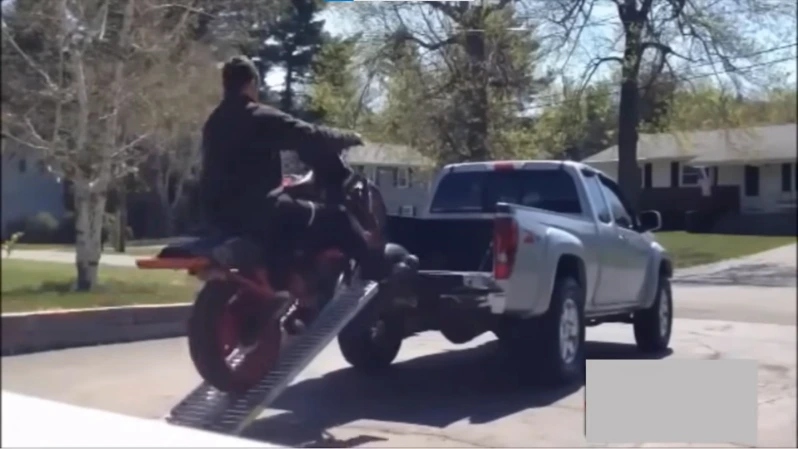
A rider on a Kawasaki Ninja noticed a significant oil pressure warning light near one of the southern Parkway overlooks and made the right call — pulled over immediately rather than riding on. Zero cell signal at that location. A passing couple stopped to help and relayed the call when they reached Asheville. We loaded the bike using the wheel chock and soft straps, transported it to a shop on Merrimon Avenue, and the rider caught a rideshare back. Turned out to be an oil pump issue that would have destroyed the engine within a few more miles of riding.
Harley Low-Side, West Asheville, Wet Road
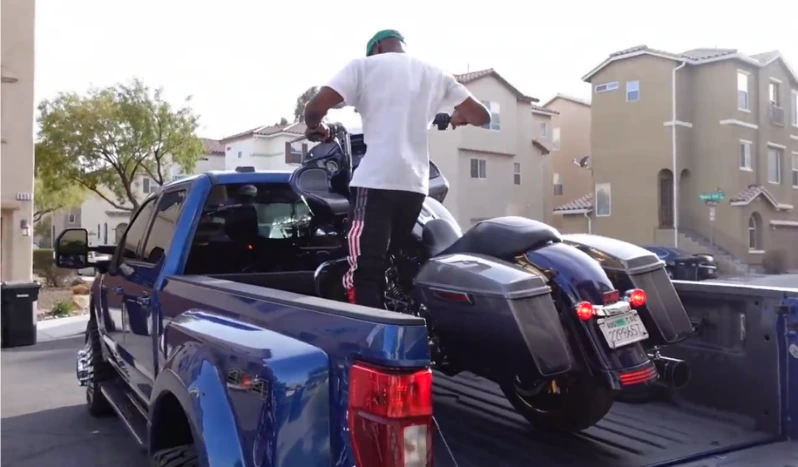
A rider went down on a painted crosswalk in light rain — the kind of surface that looks harmless until it's wet. The bike slid into the curb, the rider walked away with road rash but nothing serious, and the Harley had obvious damage to the left crash bar, footpeg, and exhaust. Less obvious: the handlebars were slightly bent. Because the bars were compromised, the driver used frame-mount strap points instead of the handlebar tubes, which is the correct approach when bars are damaged or may be misaligned. Transported to the rider's preferred Harley dealer for a full damage assessment.
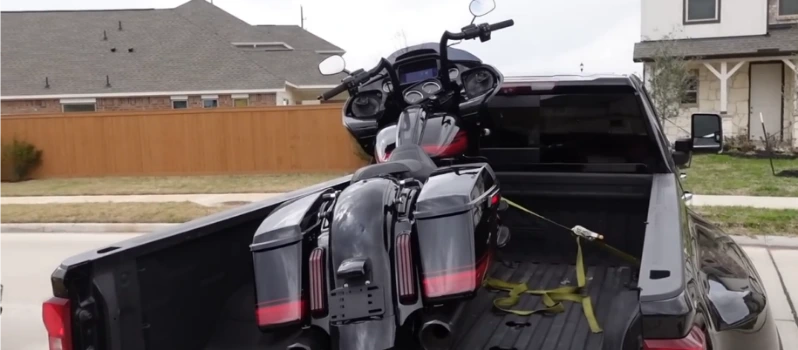
Dropped Custom Bobber, Parking Lot, South Asheville
A heavily modified bobber with a low-slung frame and extended rear fender went over in a parking lot when the kickstand found soft asphalt on a hot afternoon — a more common scenario than most riders admit. The bike itself was fine aside from a scuffed exhaust and cracked turn signal, but the owner couldn't get it upright alone and it wouldn't start afterward (flooded from sitting on its side). The low exhaust meant a standard ramp approach would have scraped on loading. Driver used a shallower angle and guide straps to keep the bike level through the full load. No additional damage, transported home for the rider to assess and sort out the flooding situation himself.