Why Is Flatbed Often the Only Correct Option?
Traditional wheel-lift towing pulls a vehicle on two wheels while the other two stay on the ground. That's fine for a lot of standard vehicles, but it's the wrong method — sometimes a genuinely damaging one — for a growing share of what's actually on Asheville's roads today.
Which Vehicles Actually Require Flatbed Towing?
Electric Vehicles
Most EVs either lack rear tow points entirely or carry manufacturer guidance against wheel-lift towing, since spinning the drive motor while the vehicle is off can generate current in a system that isn't built for it. Nearly every EV call we get is a flatbed call by default.
All-Wheel & Four-Wheel-Drive Vehicles
Towing an AWD or 4WD vehicle on two wheels can damage the drivetrain, since the system isn't built to have only two wheels turning while the vehicle is in motion.
Low-Clearance Vehicles
Sports cars and lowered vehicles often can't clear a wheel-lift tow bar without scraping the front bumper or splitter.
Collision-Damaged Vehicles
After a collision, a vehicle's tow points may not be structurally reliable — flatbed removes that risk entirely.
Motorcycles
Flatbed is the standard safe method for motorcycle recovery, avoiding damage to the bike's own systems and eliminating tip-over risk during loading.
Loading a Vehicle Onto a Flatbed
Real Flatbed Calls We've Answered
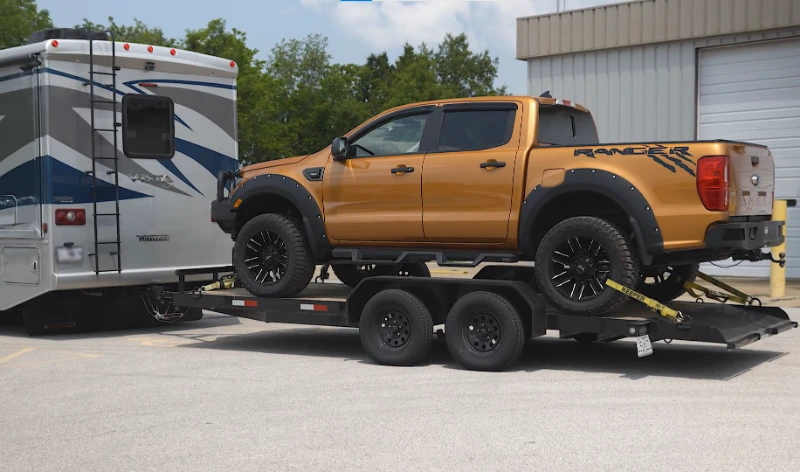
EV Fault, I-26 Interchange, Zero Rear Tow Points
A driver's EV went into a fault state near the interchange with no rear tow hooks built into the frame at all. Our driver already knew not to attempt a wheel-lift before the customer even mentioned it — straps at all four wheels, gone in fifteen minutes.
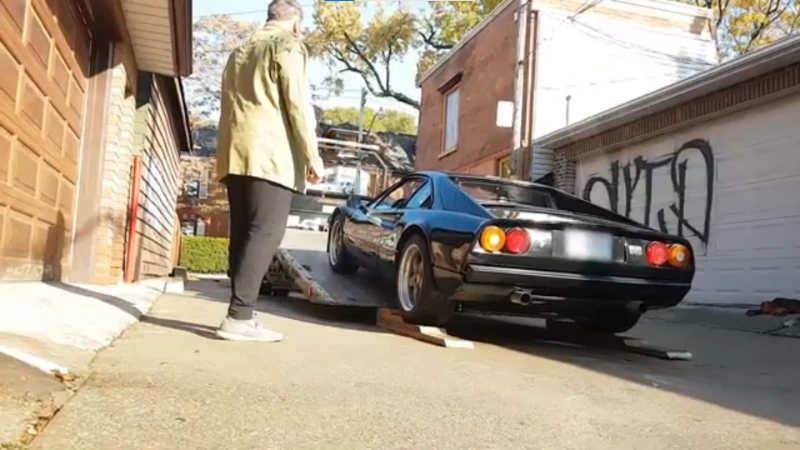
Lowered Sports Car, Residential Driveway
A customer's lowered car scraped its own driveway apron just backing out normally, which meant a standard wheel-lift tow bar was never going to clear the front splitter. We arrived with a flatbed and low-angle ramps without the customer even needing to specify it after describing the car.
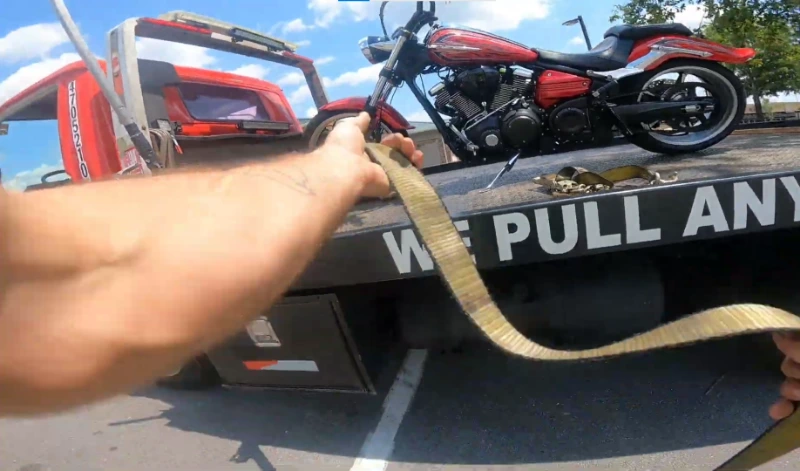
Motorcycle Recovery, Blue Ridge Parkway
A rider's bike went into limp mode near a dead cell zone on the Parkway. With no safe way to ride it down and a passing driver relaying the mile marker on the rider's behalf, we recovered the bike by flatbed rather than risk riding a compromised machine down a mountain grade.
What Customers Say About Flatbed Towing in Asheville
"Had my EV go into a fault on I-26 near the interchange with zero rear tow points. The driver already knew not to wheel-lift it before I even said anything. Flatbed, straps, gone in fifteen minutes."
"Lowered car, scraped the driveway apron just backing out normally, so a regular tow truck was never going to work. They showed up with a flatbed without me even having to specify it after I described the car."
"My Outback's all-wheel drive locked up somehow, wouldn't let go into neutral. They didn't even try to force it — straight to the flatbed."
Is Flatbed Towing More Expensive?
It can be somewhat more than a standard wheel-lift tow, since flatbed towing generally takes more time to load safely — but you'll get a clear quote before dispatch either way, factoring in vehicle type and distance.
| Factor | Typical Starting Rate |
|---|---|
| Base hook-up (standard vehicle) | ~$85 |
| Per mile beyond first 5 | ~$4.75/mi |
| Flatbed-required vehicle (EV, AWD, low-clearance) | + ~$25 |
| After-hours dispatch | + ~$35 |
Flatbed Dispatch Across All of Buncombe County
Downtown Asheville, South Asheville/Biltmore, West Asheville, and every surrounding town below — including mountain grades and the Blue Ridge Parkway.
What Drivers Ask About Flatbed vs Wheel-Lift Towing
Does my car actually need a flatbed, or is the tow company just trying to charge more?
For AWD, 4WD, and most electric vehicles — yes, a flatbed is genuinely required, not an upsell. Wheel-lifting these vehicles with drive wheels on the ground spins the transmission or drive unit without engine-powered lubrication, which can cause internal damage within a short distance. For standard FWD or RWD vehicles, wheel-lift is often fine. The determining factor is your vehicle's drivetrain and the manufacturer's towing guidance.
What is the difference between a flatbed tow and a wheel-lift tow in practice?
A flatbed: your vehicle's four wheels are all on a flat platform — zero rotational stress on the drivetrain. A wheel-lift: the front or rear axle is raised off the ground, and the other axle's wheels roll on the road surface. This is fine for two-wheel-drive vehicles lifted from the correct end, but wrong for AWD, EV, and low-clearance cars because of the rolling-wheel drivetrain risk or the approach angle required to load without scraping the undercarriage.
→ Flatbed towing explainedCan a flatbed tow truck reach a car that's stuck in a ditch or off the road?
Usually yes, using a winch rather than a straight drive-on load. The flatbed positions on the road above the vehicle, extends the winch cable, attaches to the vehicle's frame, and pulls it up to the road surface before loading onto the deck. Tell dispatch you're off the road so we know to come prepared for a winch recovery rather than a standard pickup.
How does a flatbed load a car that has no power steering or won't go into neutral?
For a vehicle with no power — no steering, no transmission engagement — the flatbed uses a wheel dolly under the front wheels to move the car into alignment with the ramp before winching it up. The winch handles the actual movement onto the deck. Power steering isn't needed because the driver moves the vehicle from outside. This is standard for accident-damaged or EV vehicles with a depleted main battery.
Flatbed vs. Wheel-Lift — Why AWD and EVs Need Four Wheels Off the Ground
Wheel-lift tows leave two wheels turning on the pavement. For AWD and EV drivetrains, that's how transmissions get damaged.
Flatbed Towing FAQs — Asheville, NC
When is flatbed towing better than a wheel-lift tow?
Flatbed towing is generally the safest choice when all four wheels should remain off the ground. It's commonly recommended for all-wheel-drive vehicles, many electric vehicles, luxury cars, lowered vehicles, motorcycles, and vehicles with significant accident damage. Because the entire vehicle is secured on the bed, flatbed towing helps reduce unnecessary wear on the drivetrain, suspension, and tires during transport.
Can a flatbed tow a vehicle that won't roll?
Yes. Vehicles with locked wheels, transmission failure, broken suspension, or severe accident damage can often still be loaded using a winch or specialized recovery equipment. The loading method depends on the vehicle's condition, but flatbed trucks are designed to transport many vehicles that cannot move under their own power.
Why do many manufacturers recommend flatbed towing for AWD and 4WD vehicles?
Many all-wheel-drive and four-wheel-drive systems are designed so all four wheels rotate together. Towing with only two wheels on the ground can place unnecessary stress on drivetrain components and may even void manufacturer recommendations. Flatbed towing keeps every wheel off the road, helping transport the vehicle according to manufacturer guidance.
Is flatbed towing the safest option for luxury and performance vehicles?
In many situations, yes. Vehicles with low ground clearance, specialty bodywork, performance suspensions, or expensive wheels are often transported on a flatbed because it minimizes road contact during transport. The vehicle remains fully supported throughout the trip, reducing the chance of additional wear while being towed.
Can you transport vehicles with mechanical failures on a flatbed?
Yes. Flatbed towing is commonly used for vehicles experiencing engine failure, transmission problems, brake issues, steering damage, or other mechanical breakdowns that make driving unsafe. Because the vehicle is completely supported during transport, additional strain isn't placed on damaged mechanical components.
Does flatbed towing reduce the risk of vehicle damage?
Flatbed towing is widely considered one of the safest transportation methods because the vehicle rides completely on the truck instead of rolling on its own wheels. While every towing situation is different, keeping all four tires off the road helps reduce exposure to tire wear, drivetrain stress, and road debris during transport.
Can classic or collector cars be transported on a flatbed?
Yes. Flatbed towing is often preferred for classic, antique, collector, and restored vehicles because it provides full vehicle support during transport. Owners of specialty vehicles frequently choose flatbeds to help protect rare components, custom paint, low-clearance bodywork, and valuable finishes.
Can motorcycles be transported on a flatbed truck?
Yes. Motorcycles can be transported on a flatbed using equipment specifically designed to stabilize two-wheel vehicles during transport. Proper tie-down procedures help keep the motorcycle secure while protecting the suspension and bodywork throughout the trip.
Is flatbed towing suitable for long-distance transport?
Yes. Flatbed towing is commonly used for long-distance vehicle transportation because the vehicle remains fully supported throughout the journey instead of rolling on its own tires. This can help minimize tire wear and reduce mechanical stress during extended transportation, especially for vehicles that shouldn't be driven.
How is a vehicle secured on a flatbed truck?
After the vehicle is positioned on the bed, professional operators secure it using industry-approved tie-down systems attached to appropriate vehicle mounting points. Once properly secured, the vehicle remains stable throughout transport, helping prevent unnecessary movement while the truck is in motion.